Posts

Why access to quality early childhood education and care is a key driver of women’s labour market participation

Image
  by Eric Charbonnier, Analyst, Directorate for Education and Skills We are in 1961. JF Kennedy is president and has just designated Eleanor Roosevelt as chairwoman of the new US Commission on the Status of Women: "We want to be sure that women are used as effectively as they can to provide a better life for our people, in addition to meeting their primary responsibility, which is in the home." Fifty-seven years ago, women had to make a choice between pursuing a career or having children. Back then, access to early childhood education and care (ECEC) services was reserved for the elite and was not considered a policy priority; maternity leave was rare, while paternity leave was unheard of. This may seem strange now, but just try to think of society in the 1960s. Just think how far we have come since then: In 1961, only 38 % of women were employed in the United States. In 2015, this figure was at 70%. Don’t be fooled by the upbeat statistics though. Two generations later, ineq...

Is physical health linked to better learning?

Image
by Tracey Burns Senior Analyst, Directorate for Education and Skills Mahatma Gandhi once said: "it is health that is real wealth and not pieces of gold and silver". And indeed, our physical well-being is key to how we live our lives. But while we don't always make the link between our minds and our bodies, physical health is important for learning, too.  Children who exercise regularly, have good nutrition and sleep well are more likely to attend school, and do well at school. And the benefits are not just for children: good physical health is associated with enhanced quality of life, increased productivity in the workplace and increased participation in the community and society.  However, children and young people across the OECD are not engaging enough in the behaviours they need to be healthy. Between 2000 to 2016, PISA data show that children and young people were less likely to reach the minimum recommended daily physical activity levels (>60 minutes of moderate ...

The importance of learning from data on education, migration and displacement

Image
by Manos Antoninis, Director, Global Education Monitoring Report Francesca Borgonovi, Senior Analyst, Directorate for Education and Skills Migration and displacement are complex phenomena which play an important role in – but can also pose challenges to – development. These phenomena also pose particularly important challenges for education and training systems. Firstly, they can rapidly increase the number of people that require education services, thus challenging both richer countries, which until now had been adjusting to shrinking student populations, and poorer countries, where provision is already stretched, especially in remote areas or slums where migrants and refugees often converge. Secondly, migration and displacement make classrooms more diverse. This means that the range of strategies teachers need to deploy increases in order to cater for a student population with larger differences in background characteristics, such as the language they speak at home. Thirdly, educatio...

What makes for a satisfied science teacher?

Image
by Tarek Mostafa Analyst, Directorate for Education and Skills Teachers play a vital role in the lives of their students. They impart knowledge, provide pastoral care, act as role models and, above all, create an environment that’s conducive to learning. But teaching is fraught with numerous challenges that could lead to dissatisfaction and ultimately to drop-out from the profession. Science teachers are particularly vulnerable to quitting their jobs given the opportunities that exist outside the teaching profession. So what makes a science teacher satisfied enough that he or she would want to keep teaching, despite the challenges they might face? Data from PISA’s 2015 teacher questionnaire provide interesting evidence . Science teachers who reported that pursuing a career in the teaching profession was their goal after finishing secondary school are far more satisfied with their jobs and with the profession as a whole . These teachers represent about 58% of all teachers on average ac...

How primary and secondary teachers differ and why it matters

Image
by Marie-Helene Doumet,  Senior Analyst, Directorate for Education and Skills Learning needs vary as we evolve through life. The early years of education set the stage for children’s well-being, cognitive and social-emotional development; young children starting out in the world require stability, reassurance, and encouragement, and need a warm and caring teacher. At primary school, teachers manage the class, teach all subjects, and help children develop not only basic competencies, but also emotional and social awareness. While this setting still requires a broad knowledge of many subjects, dealing directly with students’ social and emotional development also helps teachers bond with their class, which is essential to learning at such a young age. However, as children progress to high school, learning becomes more about the subject: secondary teachers focus on one or several subjects which they teach to a number of different classes. Their performance will be more strongly evaluat...

Shaping, not predicting, the future of students

Image
by Anthony Mann Senior Analyst, Directorate for Education and Skills Footballer Cristiano Ronaldo is reputed to have once said that there’s no point making predictions because nothing is set in stone. It is hard to predict the future, but in education policy at least it is not altogether impossible. We know, for example, from data accumulated over many years that people who exhibited certain attributes when young are more likely (sometimes very much more likely) to do better in work as adults. They are much more likely to find work after leaving school or university and to earn more than people who are otherwise just like them. Studies have shown, for example, that youngsters can expect to do better in work as adults if they read well at 10 or gain higher levels of qualifications .  We know as well, not least from recent OECD studies , that the children of wealthier parents routinely do better than their classmates from poorer backgrounds, even if they show the same academic promi...

Succeeding with resilience – Lessons for schools

Image
by Johanna Boersch-Supan Director, Vodafone Germany Foundation – think tank  Digitisation is expected to profoundly change the way we learn and work – at a faster pace than previous major drivers of transformation. Many children entering school today are likely to end up working in jobs that do not yet exist. Preparing students for these unchartered territories means that we not only have to make sure that they have the right technical capabilities but that we have to strengthen their emotional and social skills . Resilience, the individual capacity to overcome adverse circumstances and use them as sources for personal development, lies at the core of being able to successfully adapt to change and thus actively engage with our digital world. A special PISA analysis conducted by the OECD in collaboration with the Vodafone Germany Foundation shows that several countries were able to increase the share of academically resilient students with disadvantaged backgrounds over the last de...

Learning for careers: The career pathways movement in the United States

Image
by Nancy Hoffman, Senior Advisor, Jobs for the Future Bob Schwartz, Senior Research Fellow, Harvard Graduate School of Education Over the last generation, it has become clear that something has gone awry in how the United States prepares its young people for life. In spite of millions of young people pursuing university education, fewer than one in three young Americans successfully attain a bachelor’s degree, while millions of good middle-skills jobs go begging because of our failure to build programs to equip young people with the skills and credentials to fill them. In a climate of “university for all” only 20% of young Americans enrol in career and technical education programs, the US version of Vocational Education and Training. This struck us as both a problem and an opportunity crying out for a public policy response. So when the opportunity arose to come to the OECD for three months in 2010 to participate in the last phase of the landmark Learning for Jobs study, we took leave...

How to prepare students for the complexity of a global society

Image
by Anthony Jackson, Director, Center for Global Education at Asia Society Andreas Schleicher, Director, Directorate for Education and Skills In all countries, rapidly changing global economic, digital, cultural, and environmental forces are shaping young people’s lives and their futures. From Boston to Bangkok to Buenos Aires, we live today in a VUCA world: volatile, uncertain, complex, and ambiguous. The world’s growing complexity and diversity present both opportunity and challenge. On the one hand, globalization can bring important new perspectives, innovation, and improved living standards. But on the other, it can also contribute to economic inequality, social division, and conflict. How well education systems prepare all of their students to thrive amid today’s rapidly changing world will determine the future prosperity and security of their nations – and of the world as a whole. Global competence education is what will empower students to do just that. Globally competent student...

Drawing the future: What children want to be when they grow up

Image
by Andreas Schleicher Director, Directorate for Education and Skills The next generation of children will need to create jobs, not just seek jobs. They will draw on their curiosity, imagination, entrepreneurship and resilience, the joy of failing forward. Their schools will help them discover their passions and aspirations, develop their potential, and find their place in society. But that is easier said than done, and good reading, math and science skills are just part of the answer. To develop their dreams and invest the effort it takes to realise them, children need, first of all, to be aware of the world and the opportunities it offers them. We often take that awareness for granted, perhaps because schools tend to be designed and run by people who succeeded in them. But this report paints a different picture. Statistics showed previously that more than one in five teenagers are looking to secure the 2.4% of new and replacement jobs in the UK economy that are predicted to be found...

What does teaching look like? A new video study

Image
by Anna Pons Analyst, Directorate for Education and Skills Looking – literally – at how teachers around the world teach can be a game changer to improve education. The evidence is clear that teachers are what makes the greatest difference to learning, outside students’ own backgrounds. It is widely recognised that the quality of an education system is only as good as the quality of its teachers. Yet we know relatively little about what makes a good and effective teacher. Our new research project, the Teaching and Learning International Survey (TALIS) Video Study, aims to help us learn more about how our teachers teach. The study aims to provide a better understanding of which teaching practices are used, how they are interrelated, and which are most strongly associated with students’ cognitive and non-cognitive outcomes. The TALIS Video Study is based on a truly innovative research design. It uses videos to capture what goes on in the classroom, and also surveys teachers and students,...

What the expansion of higher education means for graduates in the labour market

Image
by Markus Schwabe Statistician, Directorate for Education and Skills A university degree has always been considered as key to a good job and higher wages. But as the share of tertiary-educated adults across OECD countries has almost doubled over the last two decades, can the labour market absorb this growing supply of skills? At first glance, the answer isn’t encouraging: the number of unemployed tertiary-educated adults has been increasing across OECD countries for many years. However, a closer look reveals that the unemployment rate for these adults is still much lower than for those without a university degree. The latest Education Indicators in Focus policy brief analyses long-term trends in employment outcomes of adults based on their highest level of educational attainment. The figure above shows that, in all OECD countries, adults with tertiary education still enjoy higher employment rates than those without by 10 percentage points, on average, and this advantage has changed li...

Busting the myth about standardised testing

Image
by Tarek Mostafa Analyst, Directorate for Education and Skills Standardised testing has received a bad rap in recent years. Parents and educators argue that too much testing can make students anxious without improving their learning. In particular, standardised tests that could determine a student’s future – entry into a certain education programme or into university, for example – might trigger anxiety and, if conducted too frequently, might lead to poorer performance, absenteeism and lower self-confidence. But are standardised tests really used all that frequently? And do they exacerbate anxiety and undermine performance? Evidence from PISA dispels these myths . On average across OECD countries, about one in four 15-year-old students attends a school where mandatory standardised tests are never used, and three in five attend schools where these tests are used only once or twice a year . In 11 countries, including Belgium, Costa Rica, Germany, Slovenia and Spain, more than one in two...

Citizenship and education in a digital world

Image
by Marc Fuster Consultant, Directorate for Education and Skills "Everyone believes in the atrocities of the enemy and disbelieves in those of his own side, without ever bothering to examine the evidence”, George Orwell wrote in 1943. And in an era of ‘fake news’ and post-truth , it resembles our world today. Democracies are built upon the principles of equality and the participation of citizens in public deliberation and decision making. But participation can only work if people have at least a basic understanding of the system’s norms and institutions, can form opinions of their own and respect those of others, and are willing to engage in public life one way or another. A new Trends Shaping Education Spotlight looks at how civic education can support students in developing the knowledge and skills needed to take part in the democratic process, especially in an increasingly digitalised world. Equipping young citizens with civic and political knowledge and skills is at the centre...

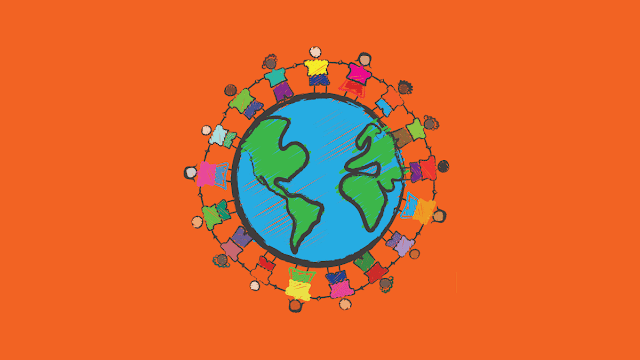
Educating our youth to care about each other and the world

Image
by Andreas Schleicher Director, Directorate for Education and Skills In 2015, 193 countries committed to achieving the 17 Sustainable Development Goals (SDGs) of the United Nations, a shared vision of humanity that provides the missing piece of the globalisation puzzle. The extent to which that vision becomes a reality will in no small way depend on what is happening in today’s classrooms. Indeed, it is educators who hold the key to ensuring that the SDGs become a real social contract with citizens. Goal 4, which commits to quality education for all, is intentionally not limited to foundation knowledge and skills, such as literacy, mathematics and science, but emphasises learning to live together sustainably. This has inspired the OECD Programme for International Student Assessment (PISA) , the global yardstick for success in education, to include global competence in its metrics for quality, equity and effectiveness in education. PISA will assess global competence for the first time...